
Dishwasher Articles on Use, Loading, Upkeep and Troubleshooting
These are our practical dishwasher articles, from how long a cycle runs to what to do when dishes come out wet.
This index collects the articles that answer everyday questions about owning a dishwasher. They explain how the machine works, what it uses in water and electricity, how long it runs and how long it should last. Others cover loading, settings and fixing common problems.
Scan the card titles below and pick the one that matches your question. If something is wrong right now, such as dishes that stay wet or a bad smell, start with the troubleshooting titles. If you are curious about a setting or a rating on the control panel or spec sheet, the explainer titles will get you there faster.
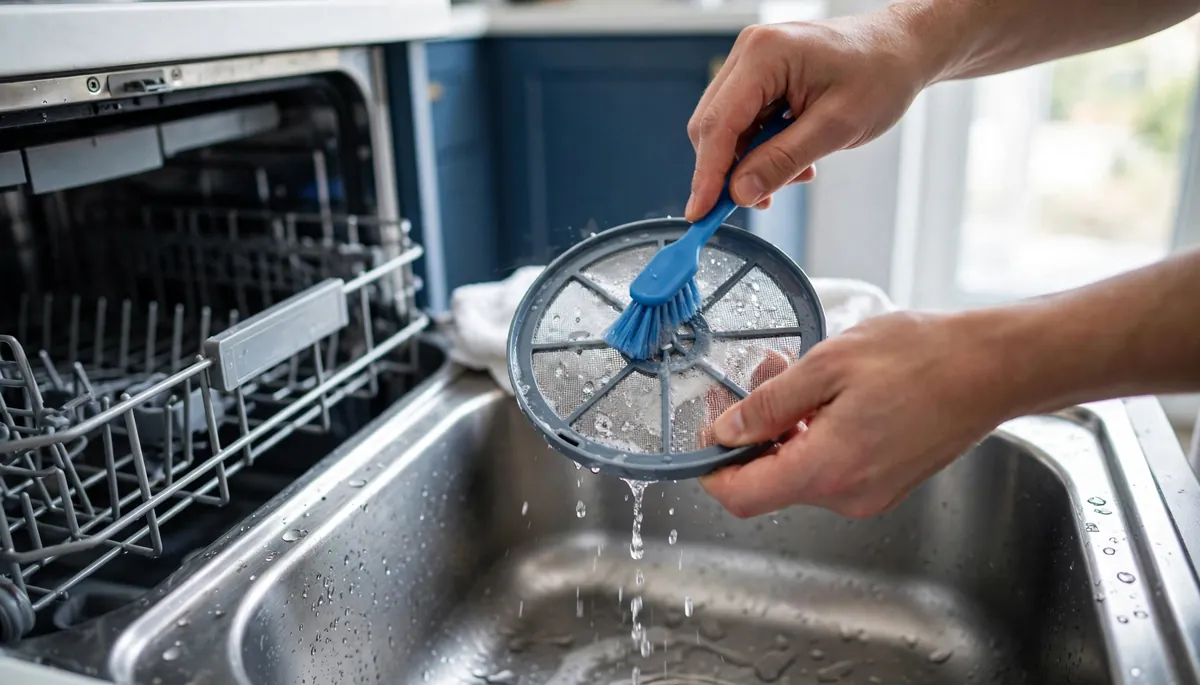
How to Clean a Dishwasher Filter
Pull the bottom rack, twist the filter counterclockwise, lift it out, rinse and scrub the mesh, then lock it back in. Ten to twenty minutes, monthly for most homes.
Read more →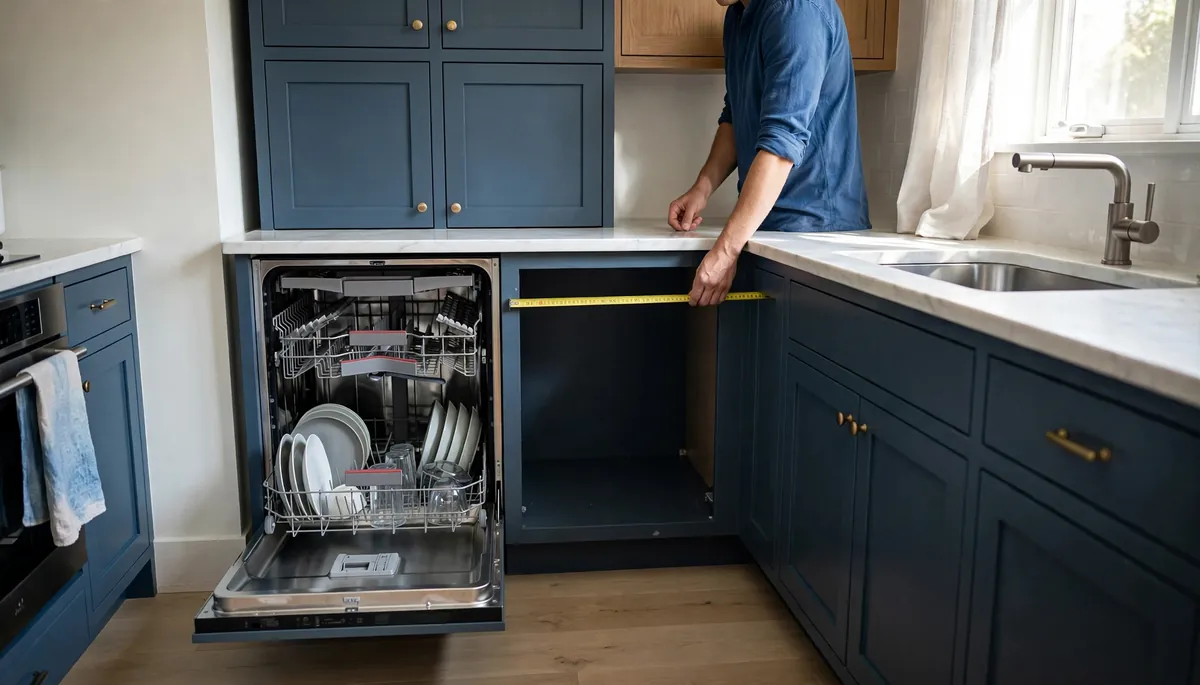
Dishwasher Dimensions: Standard and Compact Sizes Explained
Dishwasher dimensions explained: a standard 24-inch model needs a 24 x 24 x 34-35 inch opening, an 18-inch compact needs 18 x 24 x 32.5-35 inches. How to measure.
Read more →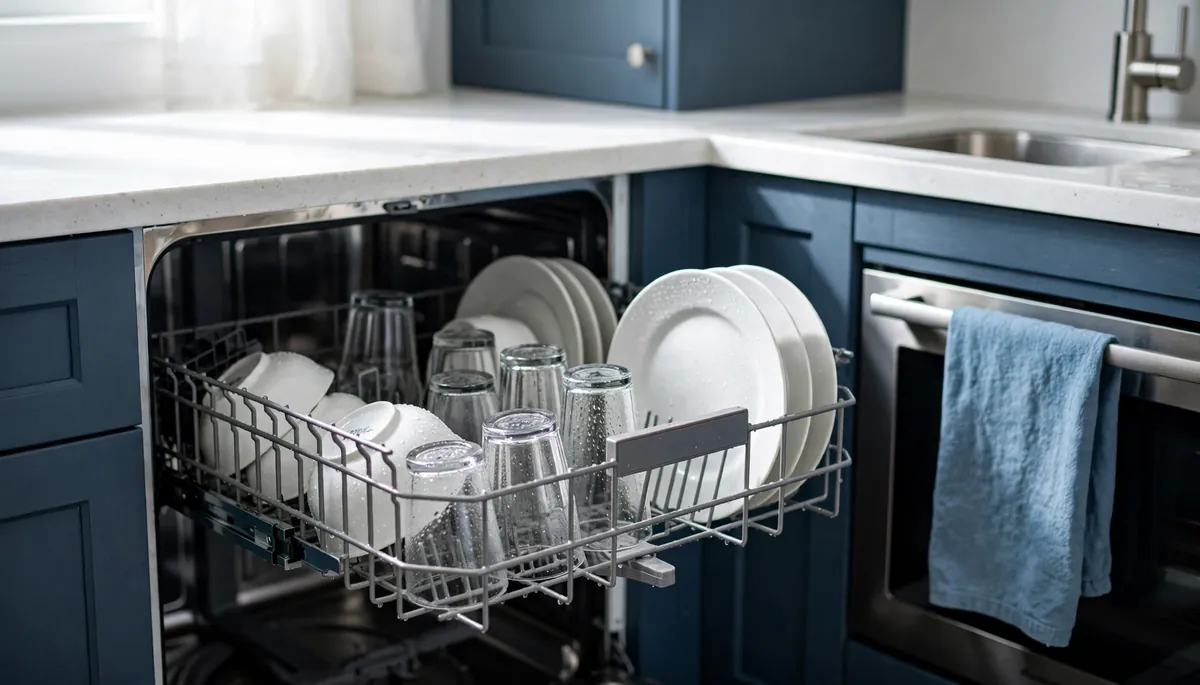
How Long Does a Dishwasher Run?
Most US dishwashers run 1.5 to 4 hours. A Normal cycle takes about 2 to 3 hours, Quick 30 to 60 minutes, and a countertop machine 30 to 90 minutes.
Read more →
How Long Should a Dishwasher Last?
A dishwasher typically lasts about 10 years, with a realistic range of 8 to 12. See what shortens its life, how to stretch it, and when to repair or replace.
Read more →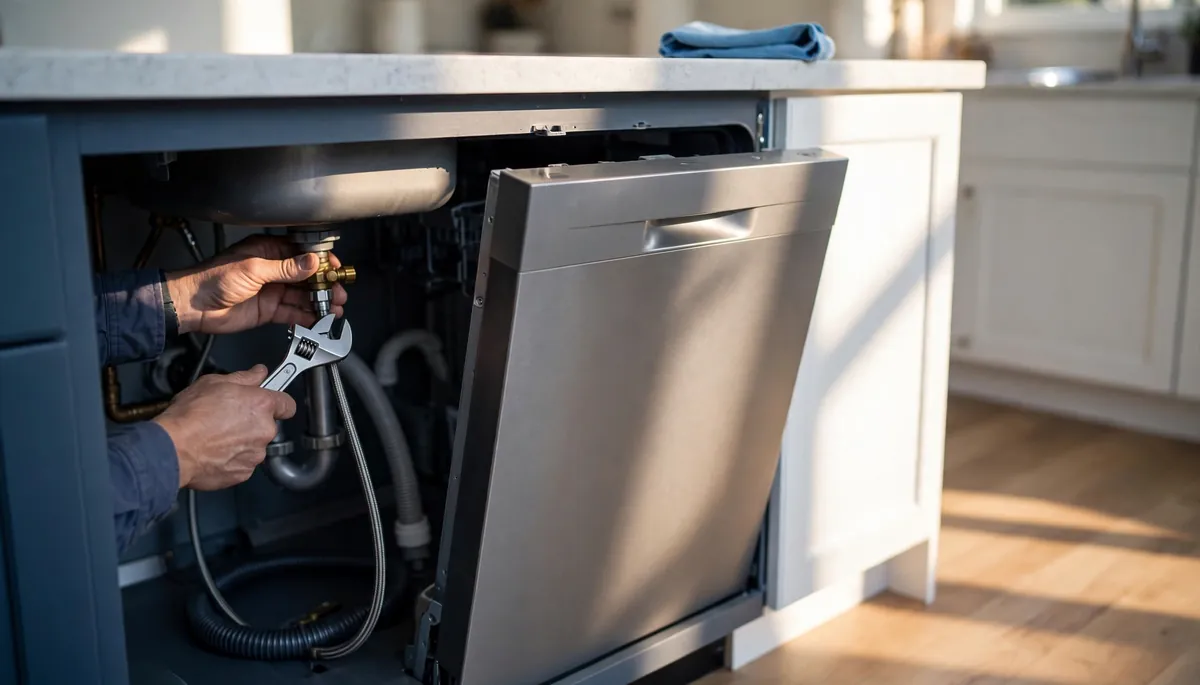
How Much Does Dishwasher Installation Cost?
Dishwasher installation cost explained: labor to replace an old unit, the all-in figure for a first-time install, and what moves the bill.
Read more →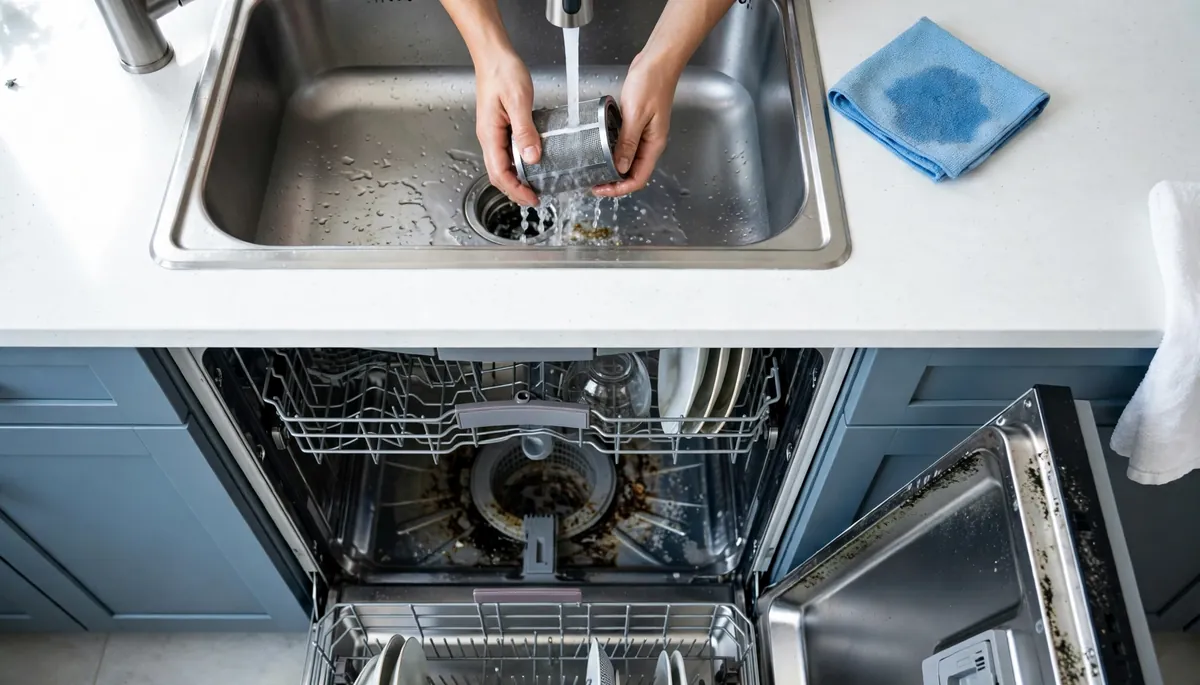
Why Your Dishwasher Smells and How to Fix It
A dishwasher smells because food, moisture and warmth let bacteria and mold grow in the filter, sump and gasket. Fix the filter first; a sewage smell means plumbing.
Read more →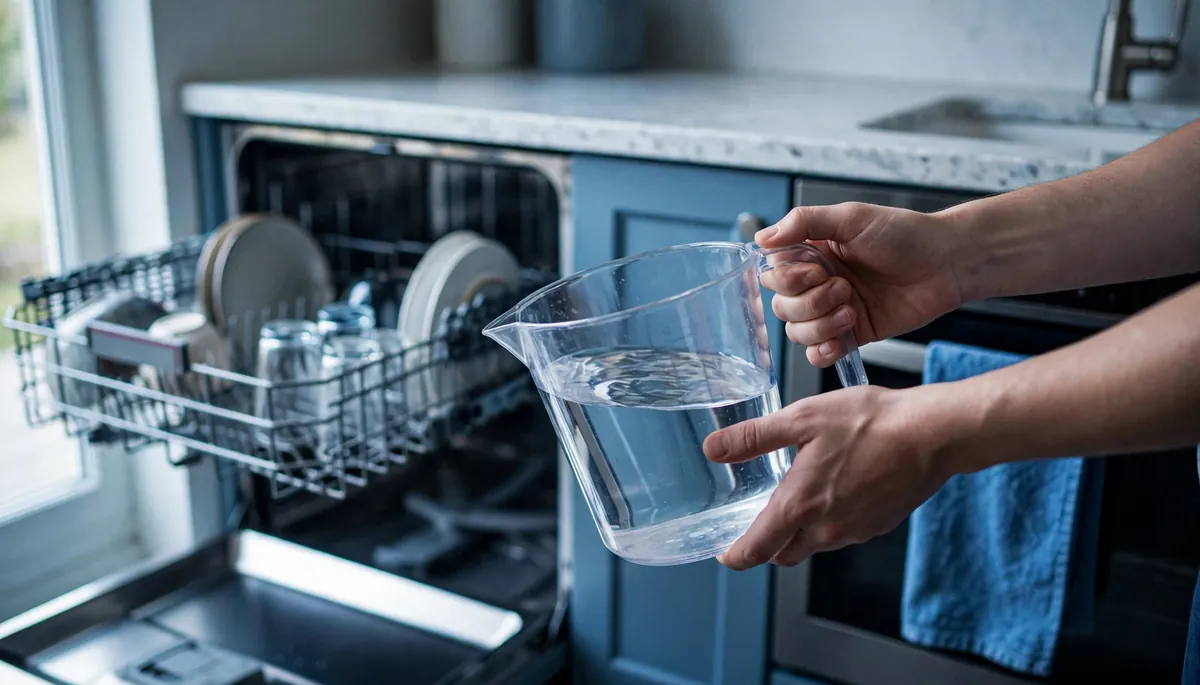
How Much Water Does a Dishwasher Use?
A new standard 24-inch dishwasher uses about 3 gallons per cycle. See the gallons by size, cycle and age, the yearly math, and how it compares to hand-washing.
Read more →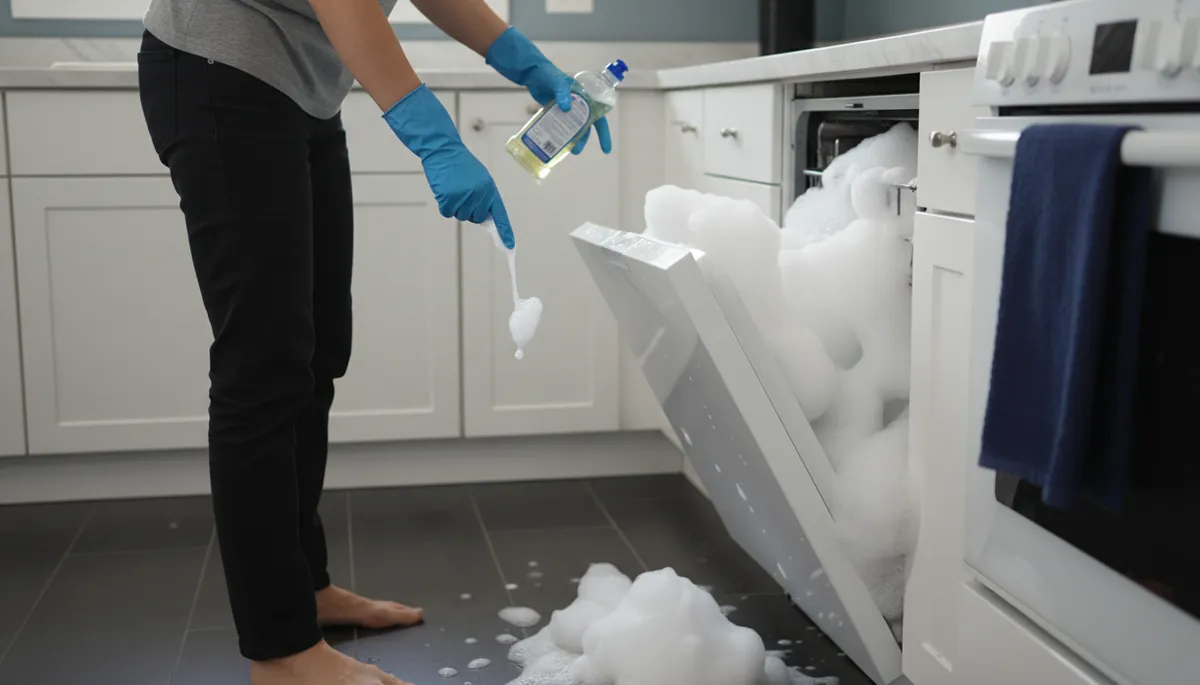
Can You Use Dish Soap in a Dishwasher?
No, dish soap never goes in a dishwasher, not even a drop. Here is why it foams over, how to clear the suds tonight, and what the error codes mean.
Read more →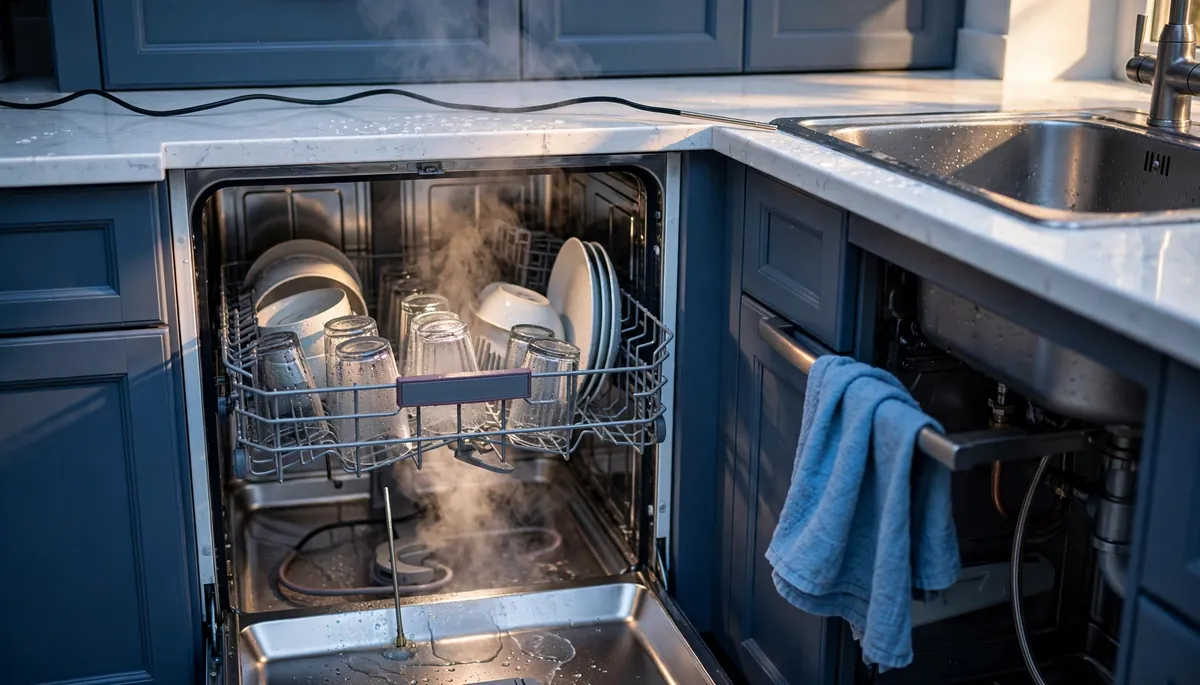
Does a Dishwasher Heat Its Own Water?
Yes, a dishwasher heats its own water as a booster on your home's hot supply. See how hot it gets, why it needs a hot line, and how to check the heater.
Read more →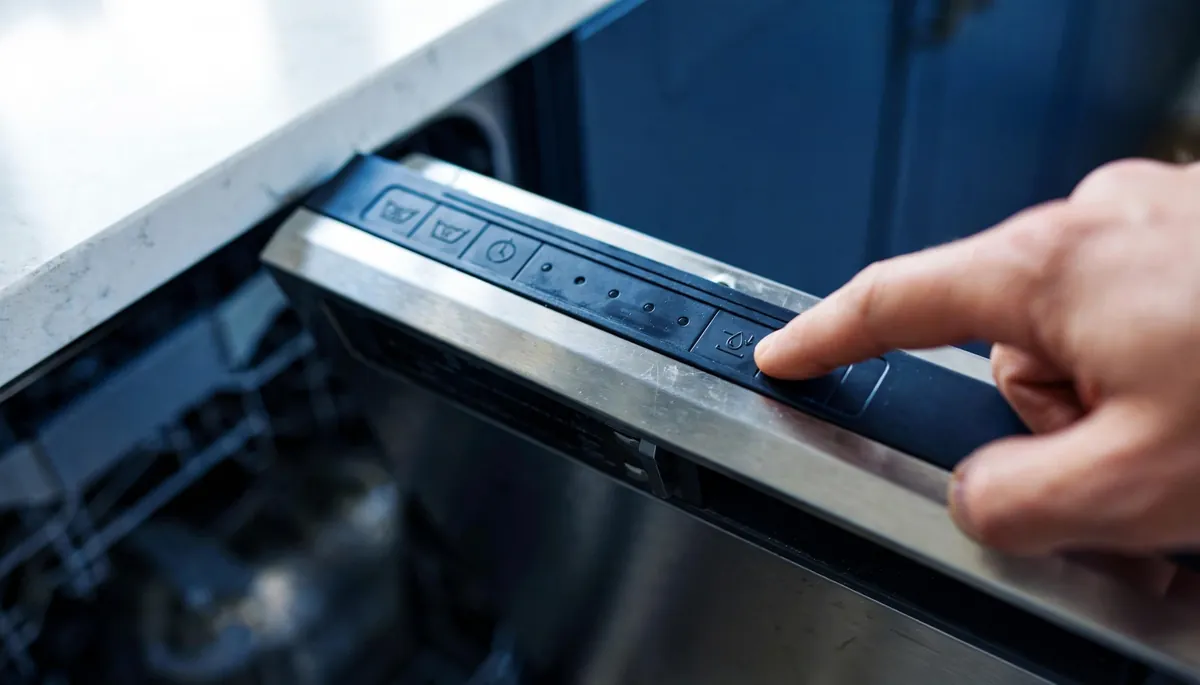
How to Reset a Whirlpool Dishwasher
Hold CANCEL/DRAIN for 3 seconds to soft-reset a Whirlpool dishwasher. If the panel is frozen, cut power for a minute. Full steps, error codes and fixes.
Read more →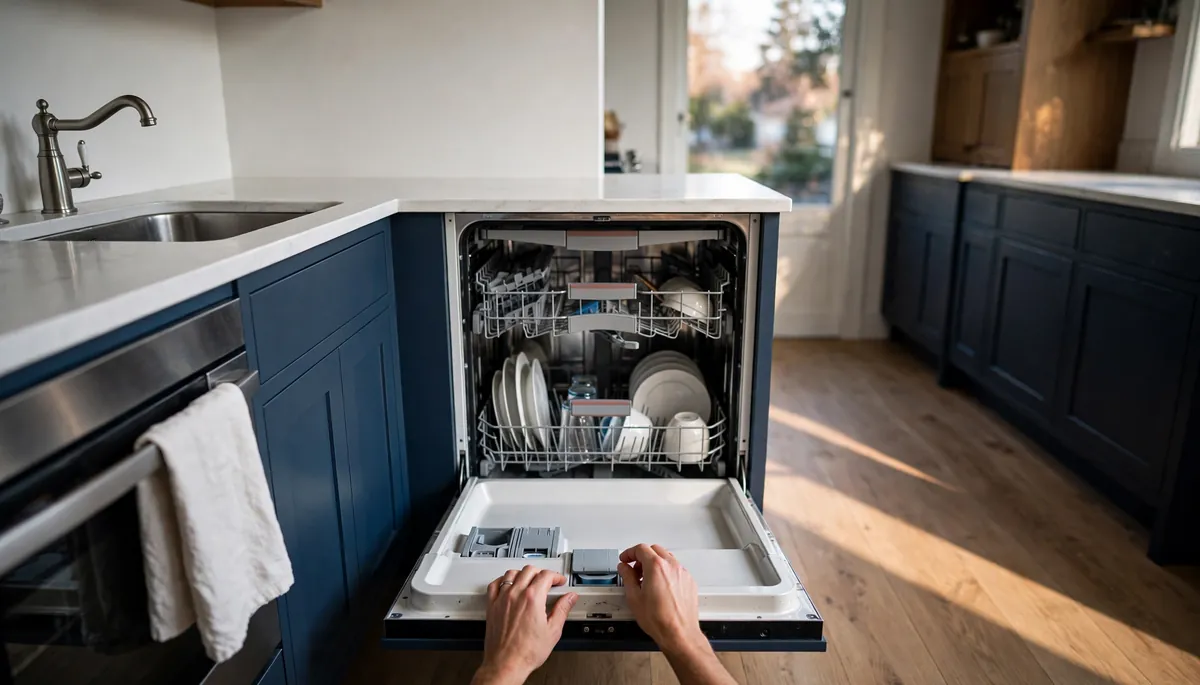
Where Do You Put a Dishwasher Pod?
A dishwasher pod goes in the main wash cup on the inside of the door, lid clicked shut. Here is why the bottom of the tub and the silverware basket waste it.
Read more →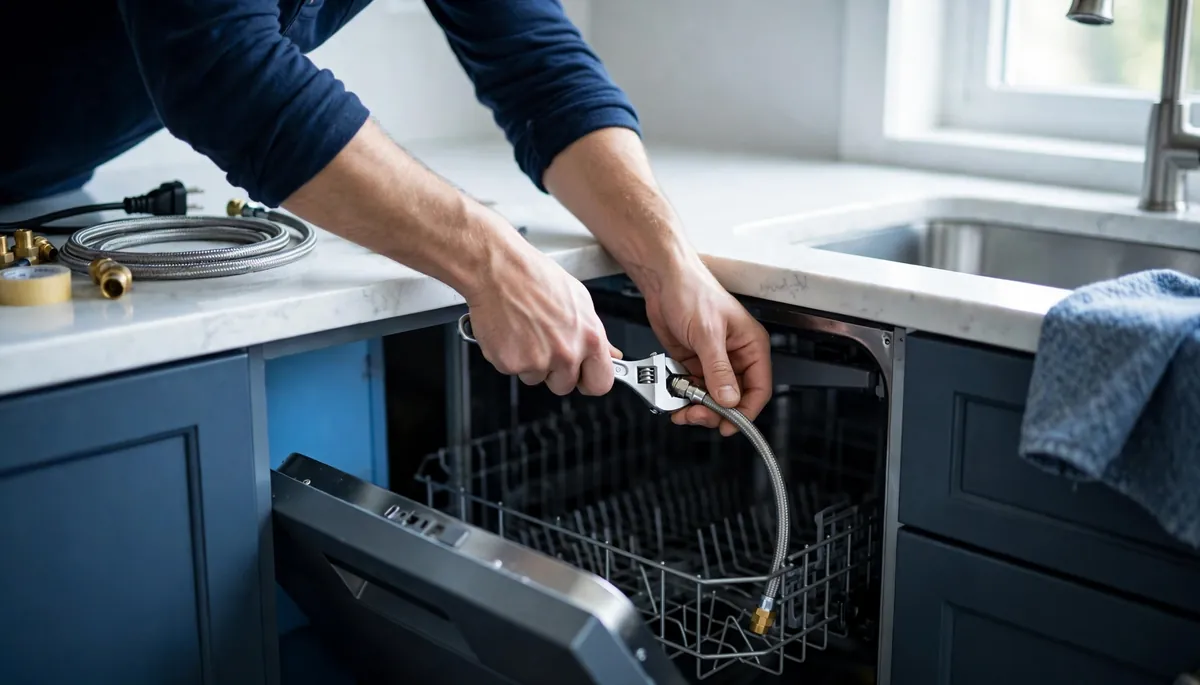
Is It Hard to Install a Dishwasher?
Replacing an existing built-in dishwasher is a 2 to 4 hour intermediate DIY job. A first-ever install or a retrofit is not. Check your hookups before you buy.
Read more →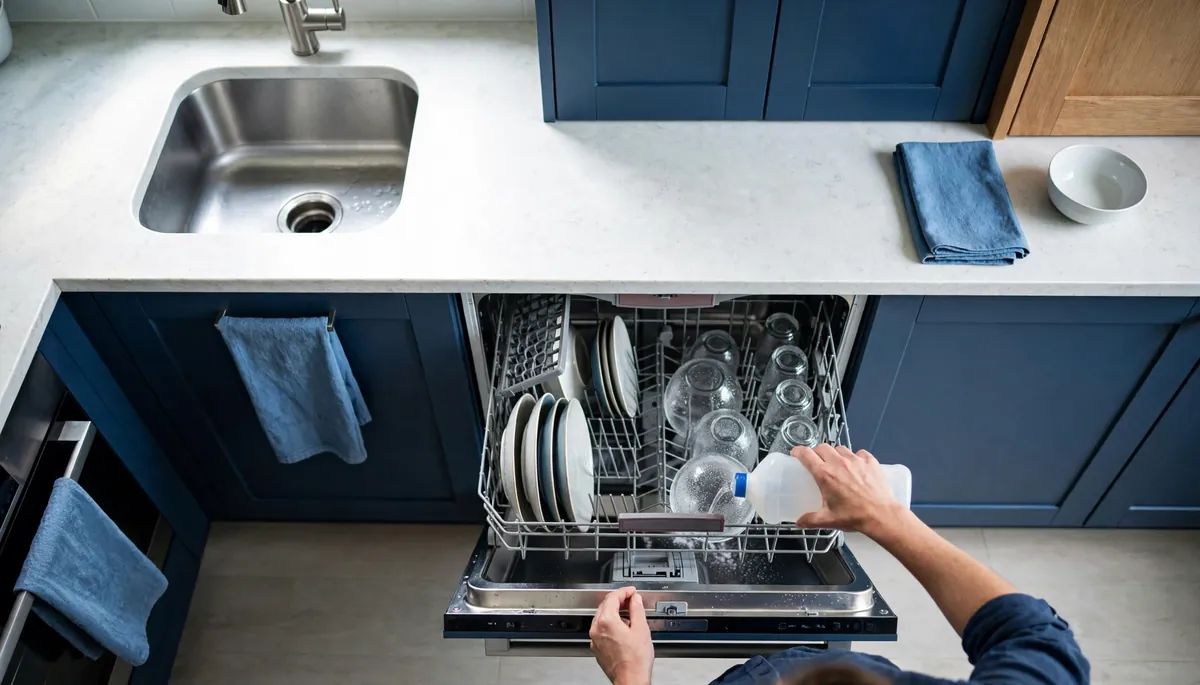
Dishwasher Not Drying? Common Causes and How to Fix Them
Dishes still wet after the cycle? Most cases come down to rinse aid, cycle choice, loading or cold inlet water. Here is how to tell a fault from normal drying.
Read more →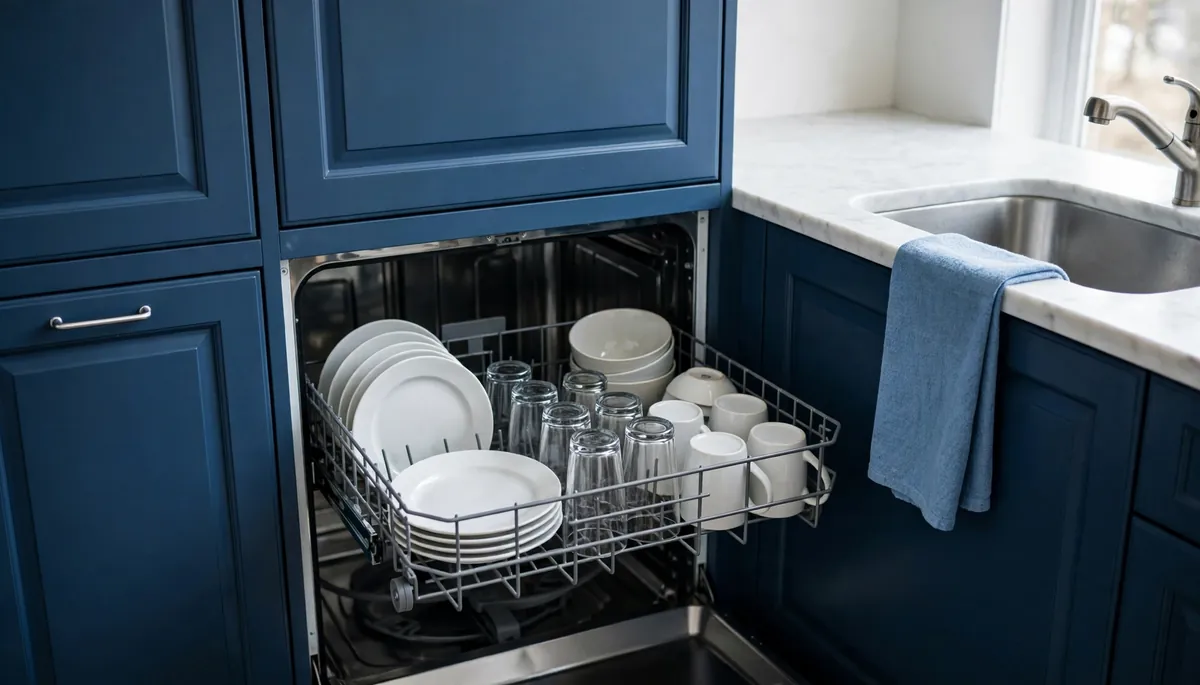
How Much Does a Dishwasher Cost?
What a dishwasher costs to buy, install and run: the price tiers, what each one buys, the extras people forget, and the yearly energy bill.
Read more →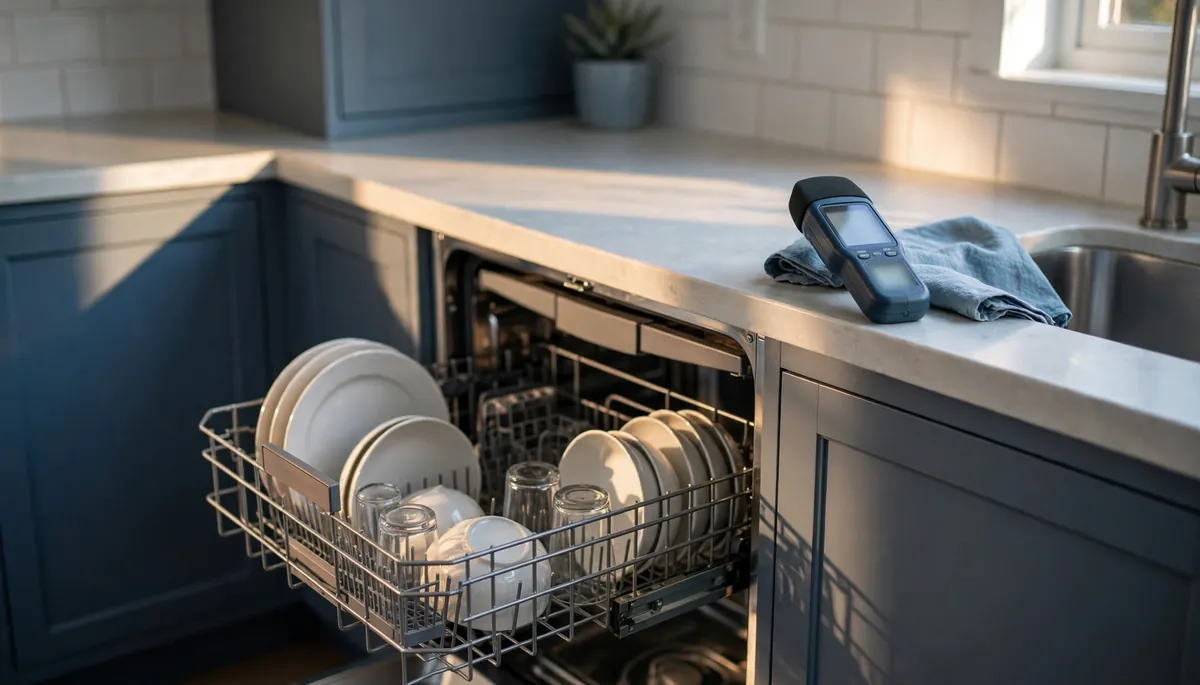
What Does dBA Mean on a Dishwasher?
DBA on a dishwasher means A-weighted decibels, the machine's noise rating. Lower is quieter. See what 44, 50 and 38 dBA sound like and which numbers matter.
Read more →Start with the kind of question you have
Most dishwasher questions fall into one of four groups: how the machine behaves, what it costs to run, how to use it well, and what to do when it misbehaves. Naming your group first makes the card titles much easier to scan. A question about cycle length or lifespan is about behavior, while one about water or electricity is about running cost.
Questions about loading, prewashing and settings are about technique, and they often fix a problem without any repair. Wet dishes, odors and cloudy glasses belong to troubleshooting, which is usually the most urgent group.
Check the simple causes before you assume a fault
Many complaints trace back to habits rather than broken parts. Dishes that come out wet, a musty smell or a poor result are often linked to how the racks are loaded, the cycle you chose, the water temperature at the start, or a dirty filter. Our troubleshooting articles go through these causes in a sensible order, so you can rule out the easy ones first.
If a basic check does not solve it, the same articles help you judge whether the problem is a quick fix or a sign that the machine is wearing out.
Know the terms on the label
Spec sheets and control panels use shorthand that can mislead when you are comparing machines or choosing a cycle. A noise rating in dBA tells you how loud the machine is, and a sanitizing option changes both heat and cycle length. Understanding these terms helps you set the machine correctly and read a product page with confidence.